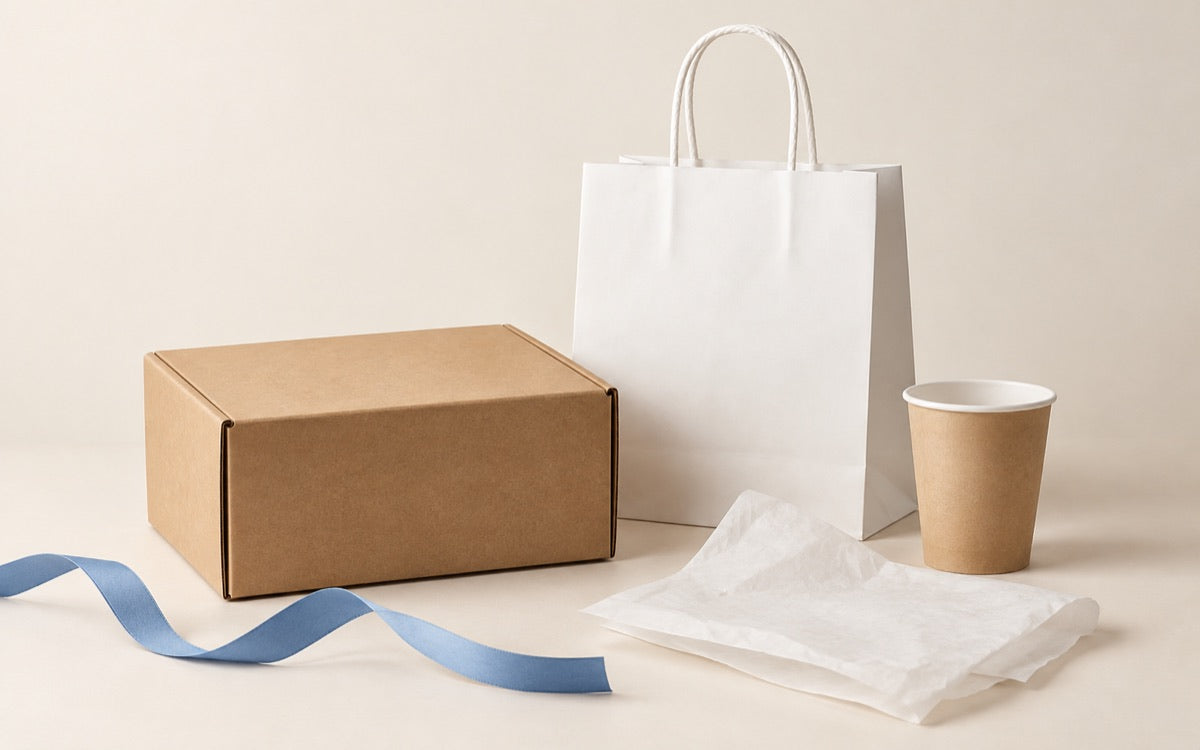
Takeout packaging should be planned before opening day, not after the first busy service. Restaurants need packaging that protects food, moves quickly through the counter, supports delivery, and gives customers a clear brand experience.
This checklist is built for restaurants, cafes, bakeries, dessert shops, and fast casual businesses preparing for launch or refreshing their takeout setup.
Quick answer
Before opening, restaurants should confirm food containers, carryout bags, cups, labels, napkins, cutlery, sauce containers, and basic branded packaging. Custom items can start with the highest-visibility pieces: bags, cups, labels, and stickers.
1. Main food containers
Start with the food itself. Packaging should fit your menu before it fits your brand design.
Choose containers based on:
- Heat.
- Moisture.
- Sauce.
- Portion size.
- Delivery time.
- Stackability.
- Whether the food should stay crisp, separated, or sealed.
Different menu items may need different packaging. A salad, burger, noodle bowl, pastry, and dessert cup do not have the same packaging needs.
Before ordering, test the packaging with real menu items. Put food inside, close it, carry it, wait 20 minutes, and open it again. This is more useful than judging packaging only from product photos.
2. Carryout bags
Carryout bags are one of the most visible restaurant packaging items. They leave the store with the customer and often appear in delivery photos, pickup counters, and office lunch orders.
Handled paper bags are useful for:
- Takeout meals.
- Cafe orders.
- Bakery purchases.
- Retail items.
- Catering add-ons.
- Branded customer carryout.
Choose bag size based on your most common order, not your largest possible order. If the bag is too large, small orders look unfinished. If it is too small, staff may need to double-bag or repack during busy service.
3. Cups and drink packaging
If beverages are part of your menu, cups should be planned with lids, sleeves, carriers, and bag fit.
For hot drinks, confirm:
- Cup size.
- Lid fit.
- Sleeve need.
- Heat handling.
- Print placement.
For cold drinks, confirm:
- Cup clarity.
- Lid type.
- Straw opening.
- Condensation.
- Drink visibility.
If drinks are a major part of your brand, custom cups may be one of the best early investments.
4. Labels and stickers
Labels and stickers are small, but they solve several restaurant problems at once.
They can:
- Seal bags.
- Seal food containers.
- Identify flavors or menu items.
- Add logo visibility.
- Mark limited-time specials.
- Make plain packaging feel branded.
For new restaurants, labels are a flexible way to brand multiple packaging items before committing to large custom runs for every container.
5. Napkins and cutlery
Napkins, cutlery, and service items should match the way customers eat your food.
Consider:
- Forks, spoons, knives, chopsticks, or stirrers.
- Wrapped or loose cutlery.
- Napkin quantity by order type.
- Sauce cups and lids.
- Straws and drink accessories.
- Whether orders need wet wipes or special handling.
These items may feel basic, but missing them creates customer frustration. Build them into the packing process before opening.
6. Sauce cups and small add-ons
Sauces, dips, toppings, and condiments need their own packaging plan. A good sauce cup should close securely and fit inside the main package without leaking.
Think through:
- Which sauces are included by default.
- Which sauces are optional.
- Whether sauce labels are needed.
- How staff will identify special requests.
- Where sauce cups sit inside the bag.
Small add-ons can cause big fulfillment problems if they are not organized.
7. Branded inserts or cards
Restaurants do not always need inserts, but they can be useful for certain business models.
Use inserts for:
- Catering information.
- Reorder instructions.
- Loyalty programs.
- QR code menus.
- Brand story.
- Care or reheating instructions.
For food businesses, keep inserts short and practical. Customers are more likely to keep or scan them if the message is useful.
8. The opening packaging checklist
Use this as a pre-opening review.
Food and drink
- Main food containers.
- Side containers.
- Dessert cups or boxes.
- Hot cups.
- Cold cups.
- Lids.
- Sauce cups.
- Cup carriers if needed.
Carryout and delivery
- Paper bags.
- Larger order bags.
- Delivery-safe seals.
- Labels or stickers.
- Napkins.
- Cutlery sets.
- Straws or stirrers.
Branding
- Logo stickers.
- Custom paper bags.
- Custom cups.
- Branded labels.
- Inserts or cards.
- Seasonal or launch packaging.
Operations
- Packing station layout.
- Reorder quantities.
- Storage space.
- Staff packing instructions.
- Backup plain packaging.
- Proof approval for custom items.
9. What to customize first
If budget is limited, customize the items with the most visibility and repeat use.
Usually, that means:
- Paper bags.
- Cups.
- Stickers or labels.
- Food packaging for signature items.
You can add custom boxes, inserts, napkins, or seasonal packaging later as order volume becomes clearer.
10. Proof before production
Every custom packaging order should have a review step before production. A digital production proof helps confirm logo placement, sizing, print area, and general layout.
If you use an online design tool, the 3D preview is helpful for understanding the look, but it should be treated as a visual reference. The production proof is the document to check before manufacturing.
If you prefer not to use the design tool, send artwork to sales@skyislets.com.
FAQ
What packaging does a restaurant need before opening?
A restaurant should prepare food containers, bags, cups, lids, labels, napkins, cutlery, sauce cups, and any branded items needed for takeout or delivery.
What restaurant packaging should be customized first?
Paper bags, cups, stickers, and labels are usually the best first custom packaging items because they are visible and used often.
How many packaging sizes should a new restaurant order?
Start with the fewest sizes that cover your core menu. Too many sizes can slow down service, increase storage needs, and make reordering harder.
Should restaurants use branded stickers?
Yes, branded stickers are a flexible way to seal bags and containers, identify products, and make plain packaging feel more branded.